
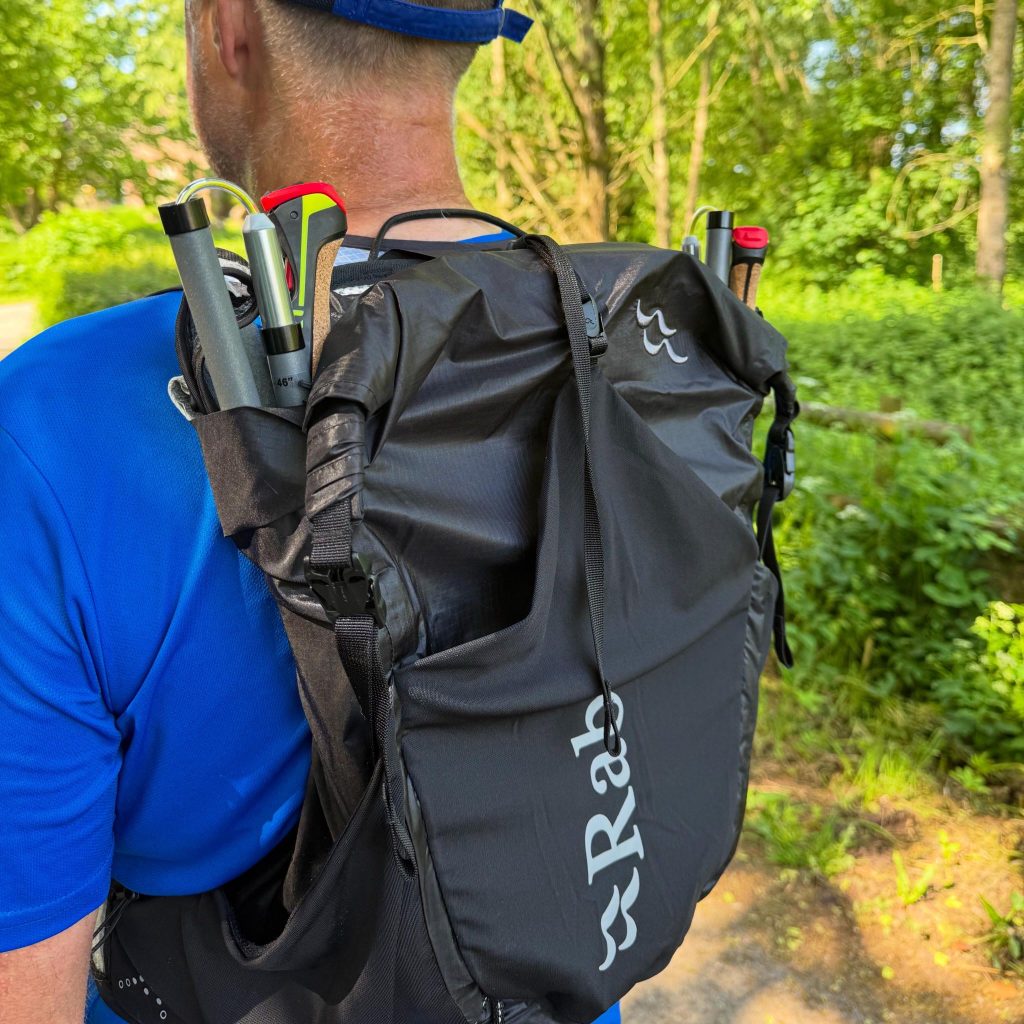
Rab Veil XP20 Review: Tested on 20+ Mile Camino Training Runs
When I started preparing for my 10-day Camino run from Porto to Santiago, I needed a pack that could carry significantly more gear than a standard hydration vest.
The challenge was finding something that still felt runnable.
After plenty of research, I settled on the Rab Veil XP20.
I’ve now completed two training runs of over 20 miles carrying a realistic Camino load, and this review shares what worked well, what didn’t, and whether I’d buy it again.
If you’re looking for a lightweight fastpacking pack for long-distance running adventures, here’s my real-world experience.
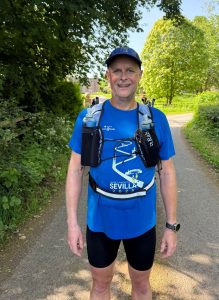
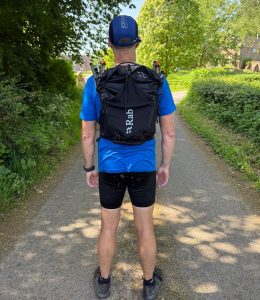
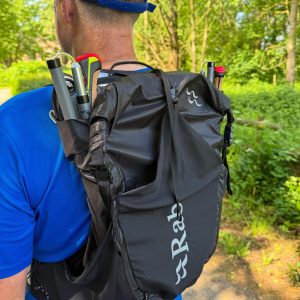
“Rab Veil XP20 loaded with gear during a 20+ mile Camino training run.”
Quick Verdict
After two 20+ mile training runs carrying a realistic Camino load, the Rab Veil XP20 has impressed me more than any running pack I’ve used in recent years.
What makes it stand out isn’t simply the 20-litre capacity.
It’s the fact that Rab has managed to build a pack that still feels like a running vest rather than a small hiking backpack.
The standout features for me were:
- the huge front hydration pockets,
- excellent weight distribution,
- surprisingly effective sweat management,
- and a waist belt system that genuinely improves comfort when carrying heavier loads.
As a heavy sweater, I was particularly impressed by how well the water-resistant construction protected the contents of the pack from sweat ingress. Despite completely soaking the shoulder straps, waist belt and outer fabrics during long runs, everything stored inside remained dry.
The pack isn’t perfect. It’s expensive, and the roll-top closure system can feel slightly fiddly when packing and unpacking gear throughout the day.
However, these are minor complaints compared with the overall performance.
For runners tackling multi-day adventures, fastpacking routes, Camino journeys, or races requiring larger kit loads, the Veil XP20 is one of the best running-focused packs I’ve tested.
Pros
✅ Huge front flask pockets
✅ Excellent weight distribution
✅ Outstanding waist belt system
✅ Water-resistant against sweat ingress
✅ Dries very quickly
✅ Pole carry system works brilliantly
✅ Feels like a running vest rather than a backpack
✅ Minimal bounce when fully loaded
Cons
❌ Expensive
❌ Roll-top closure can be fiddly
❌ Requires sensible packing strategy
❌ Slightly harder to compress when carrying very little kit
Overall Rating
⭐⭐⭐⭐⭐ 4.5 / 5
A brilliant choice for runners tackling multi-day adventures, ultras, or fastpacking routes where you need more capacity than a traditional hydration vest.
See Rab Veil XP20 Pack Here
Key Specifications
Why I Chose the Veil XP20
Most hydration vests simply don’t offer enough storage for a multi-day Camino adventure.
I needed enough capacity for spare clothing, waterproofs, nutrition, electronics, first aid supplies and daily essentials, while still being able to run comfortably.
Many hiking packs offered the capacity but looked cumbersome for running.
What attracted me to the Veil XP20 was the promise of combining genuine running comfort with fastpacking-level storage.
On paper it seemed to bridge the gap between a traditional hydration vest and a lightweight backpack.
After two long training runs, I now have a much better understanding of whether it actually delivers on that promise.
Fit, Comfort and Running Performance
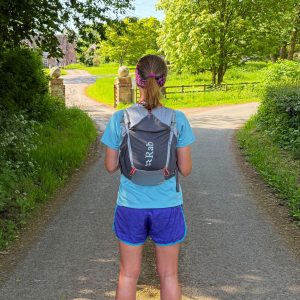
The first thing that struck me about the Rab Veil XP20 was how little it felt like a traditional backpack.
Most 20-litre packs sit somewhere between a hiking pack and a running vest. The Veil XP20 feels much closer to the running vest end of the spectrum.
The mono mesh harness wraps around the body in a similar way to a hydration vest and, once adjusted correctly, the pack feels secure without feeling restrictive.
I’ve now completed two training runs of over 20 miles carrying a realistic Camino load and was genuinely surprised by how comfortable the pack remained throughout.
One of my biggest concerns before buying the Veil XP20 was bounce. Carrying a few litres of fluid and some snacks is one thing. Carrying clothing, electronics, nutrition, waterproofs and all the other kit required for a multi-day adventure is another.
Fortunately, bounce was minimal.
Even on rough trails and descents, the load remained remarkably stable. I rarely found myself adjusting straps or constantly repositioning the pack, which is usually a sign that a pack has been designed properly.
The Waist Belt System: The Feature That Changed Everything
If there is one feature that impressed me more than any other, it was the waist belt system.
Most hydration vests rely almost entirely on shoulder straps and chest straps to support the load. As pack weight increases, that weight inevitably starts pulling down on your shoulders.
The Veil XP20 takes a different approach.
The adjustable waist belt allows you to transfer a significant proportion of the load onto your hips, creating a much more balanced carrying experience.
What I particularly liked was the combination of Velcro adjustment and buckle closure.
This allowed me to fine-tune the fit throughout the run depending on terrain, fatigue and how much fluid I was carrying.
On longer climbs I could tighten the belt slightly and shift more weight onto my hips.
Later in the run, when fatigue started creeping in, I could make small adjustments to maintain comfort.
It sounds like a simple feature, but over the course of a 20+ mile day it makes a noticeable difference.
Rather than carrying everything through the shoulders, the load feels distributed across the entire torso.
For runners considering multi-day adventures, fastpacking routes or Camino journeys, I believe the waist belt is one of the Veil XP20’s strongest features.
Sweat Management: A Hidden Feature That Heavy Sweaters Will Love
As someone who sweats heavily, one issue I rarely see discussed in backpack reviews is what happens when litres of sweat start soaking into the pack over several hours.
This matters more than many runners realise.
On long runs I regularly soak shoulder straps, back panels and waist belts. With some packs, that moisture eventually works its way into spare clothing, electronics and other kit stored inside.
During both of my 20+ mile training runs, the outside of the Veil XP20 became completely saturated with sweat.
The shoulder straps were soaked.
The waist belt was soaked.
The rear of the pack was soaked.
Yet despite all that moisture, the contents of the main compartment remained dry.
For me, this was one of the biggest surprises of the entire test.
Rab’s water-resistant construction appears to work both ways. It helps keep rain out, but it also significantly reduces sweat ingress from the outside.
As a heavy sweater carrying spare clothing for a multi-day adventure, this was a genuine game changer.
Another pleasant surprise was how quickly the pack dried after use.
Although I managed to completely soak the outer materials during both runs, the fabrics shed moisture remarkably quickly once I stopped.
Many packs remain damp for hours after a run. The Veil XP20 dried far quicker than I expected.
It may not be the feature highlighted in the marketing material, but for sweaty runners it became one of the most valuable benefits of the entire pack.
Want to know how to measure your seat rate – try my sweat rate calculator
or want to: Know why you sweat so much when running
Front Hydration Pockets: Better Than Most Running Vests
One of my biggest frustrations with many hydration vests is replacing soft flasks while moving.
Removing them is easy.
Getting them back into the pockets often isn’t.
Many hydration vests use pockets that grip the flask so tightly that replacing it requires both hands and often means slowing down or stopping altogether.
The Veil XP20 was noticeably different.
The hydration pockets are larger and far more generous than those found on most running vests I’ve used.
Throughout testing I found it much easier to remove, refill and replace soft flasks without fighting the pocket opening.
This sounds like a small detail, but over the course of a long day it makes hydration management significantly easier.
For heavy sweaters who regularly refill bottles, manage electrolytes and monitor fluid intake, the larger pockets become a surprisingly important advantage.
Want to know what are the best soft flasks to use, then have a look at my product review for: soft flasks
or want to see the: Best electrolytes for heavy sweaters
Pole Carry System: Excellent for Nordic Walking Poles
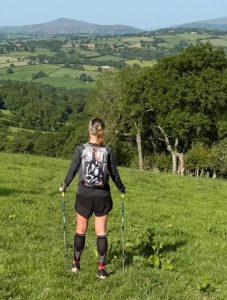
One feature I wasn’t sure I would use much when I bought the Veil XP20 was the integrated pole carry system.
After two long training runs, it has become one of my favourite features.
For the steeper trail sections I switched from running to an ultra-style Nordic walking technique using my Nordic walking poles to help maintain forward progress while reducing effort on the climbs.
The ability to quickly deploy and stow the poles made a huge difference.
The attachment system held the poles securely and I never experienced any unwanted movement, rattling or bouncing while running.
What impressed me most was how naturally the system worked when transitioning between running and pole-assisted climbing.
I could run the flatter sections, deploy the poles for steeper climbs and then stow them away again when they were no longer needed.
For runners training for long-distance events, mountain ultras or Camino adventures, this flexibility is a genuine advantage.
While the system is marketed towards trail runners, I found it worked equally well with Nordic walking poles and became an important part of my overall strategy for managing fatigue during longer training runs.
Why I Think This Pack Is Perfect for Camino Training
The Veil XP20 feels almost purpose-built for Camino training.
It has enough capacity to carry a realistic multi-day load without becoming bulky.
It remains stable while running.
The hydration access is excellent.
The pole carry system works brilliantly.
The water-resistant construction protects spare clothing from sweat ingress.
Most importantly, it allows you to train exactly as you intend to travel.
Rather than guessing how a pack might perform during a multi-day journey, I’ve been able to load the Veil XP20 with realistic gear and test it properly over multiple 20+ mile training days.
That has given me confidence not only in the pack itself but also in my packing strategy before setting foot in Portugal.
How Does It Compare to a Hydration Vest?
What I Packed During My 20+ Mile Test Runs
This wasn’t a lightly loaded test.
I deliberately carried a realistic Camino setup because I wanted to know how the pack would behave when it actually mattered.
Too many reviews test a pack with little more than a waterproof jacket and a few snacks.
I wanted to replicate the sort of load I expect to carry day after day between Porto and Santiago.
This included:
- 2 x soft flasks
- spare water bottle
- waterproof jacket
- a complete change of running kit
- spare socks
- lightweight towel
- first aid kit
- nutrition
- phone
- power bank
- charging cables
- wallet and essentials
This created a realistic test rather than simply jogging around with an almost empty pack.
The Veil XP20 handled this load surprisingly well and still felt stable throughout the run.
During the first few miles I was very aware that I was carrying more gear than I normally would in a hydration vest.
However, once the pack settled and I found the correct adjustments, I largely forgot about it.
By the end of the run I was still comfortable and wasn’t desperately trying to remove the pack at every opportunity.
While I didn’t weigh the pack precisely before every run, it was carrying significantly more than a typical race vest setup and represented a realistic Camino training load. The fact that the Veil XP20 remained comfortable and stable under these conditions gave me confidence that it will cope well with the demands of a multi-day journey.
Packing Tips for the Rab Veil XP20
After two long training runs I found the most comfortable packing strategy was:
Closest to Your Back
- spare clothing
- towel
- other soft items
Middle Layer
- heavier items
- electronics
- nutrition
Outer Layer
- waterproofs
- frequently accessed gear
Placing soft items against my back dramatically improved comfort and eliminated the rubbing I experienced during my first run.
What Could Be Better?
No pack is perfect.
Lower Back Rubbing
During my first long run I experienced rubbing from the lower section of the pack.
Initially I wondered whether this was a design issue.
After experimenting with different packing layouts, I became convinced the problem was entirely self-inflicted.
I had placed harder items low in the pack where they created pressure points against my lower back.
Once I repacked the bag using softer items closest to my back, the issue largely disappeared.
In fairness to Rab, I don’t believe this was a flaw with the pack itself.
It was simply a useful reminder that carrying a 20-litre load requires more thought than throwing gear into a standard hydration vest.
Due to this experience I decided to write an article specifically on – How to stop your back pack rubbing:
You can find it here: How to stop your Running pack from rubbing
Roll-Top Closure
The only other criticism I have concerns the roll-top closure.
The system works extremely well and undoubtedly contributes to the pack’s water resistance.
However, it can be slightly fiddly when opening and closing the pack repeatedly throughout the day.
You need to roll, fold and secure the closure correctly to get the best result.
That said, this is a very minor complaint and one I am more than willing to accept given how effectively the system protects the contents from sweat and bad weather.
Running With An Empty Pack
One final observation is that the pack can feel slightly harder to cinch down when carrying very little gear.
However, I don’t really consider this a major criticism because that simply isn’t what the Veil XP20 was designed for.
This is a pack intended to carry meaningful loads over long distances.
When used for its intended purpose, it performs exceptionally well.
Who Is This Pack Best For?
Buy This If
✅ You’re running the Camino
✅ You’re fastpacking
✅ You need more capacity than a hydration vest
✅ You want to run rather than hike
✅ Nordic walkers who mix running and walking on hilly terrain
✅ Anyone using poles regularly during long-distance adventures
Don’t Buy This If
❌ You only run races
❌ You rarely carry kit
❌ A 5–12L vest is enough
Who Should Buy the Rab Veil XP20?
Ideal for:
- Camino runners
- Fastpackers
- Multi-day running adventures
- Ultra runners carrying larger loads
- Nordic walkers using poles
- Heavy sweaters needing spare clothing protection
See Rab Veil XP20 Pack Here
Less suitable for:
- Short races
- Minimalist runners
- People carrying almost no kit
Would I Buy It Again?
Yes.
After two long training runs, the Veil XP20 has largely delivered what I hoped it would.
It’s lightweight, stable, and genuinely runnable.
The lower-back rubbing issue taught me that packing strategy matters, but once I adjusted my load placement the pack became much more comfortable.
For my upcoming Camino adventure, it currently looks like the pack I’ll be taking.
The biggest compliment I can give the Rab Veil XP20 is that it has removed almost all of my concerns about carrying a multi-day load on the Camino.
- It runs better than I expected.
- It manages sweat better than I expected.
- It carries poles better than I expected.
- And once I refined my packing strategy, it became significantly more comfortable than I expected.
No pack is perfect, but after two 20+ mile training runs, the Veil XP20 has earned its place on my Camino kit list.
If you’re looking for a genuinely runnable fastpacking pack rather than a small hiking backpack, this is one of the best options I’ve tested.
See Rab Veil XP20 Pack Here